
IBPS PO vs SBI PO: Which Is Better?
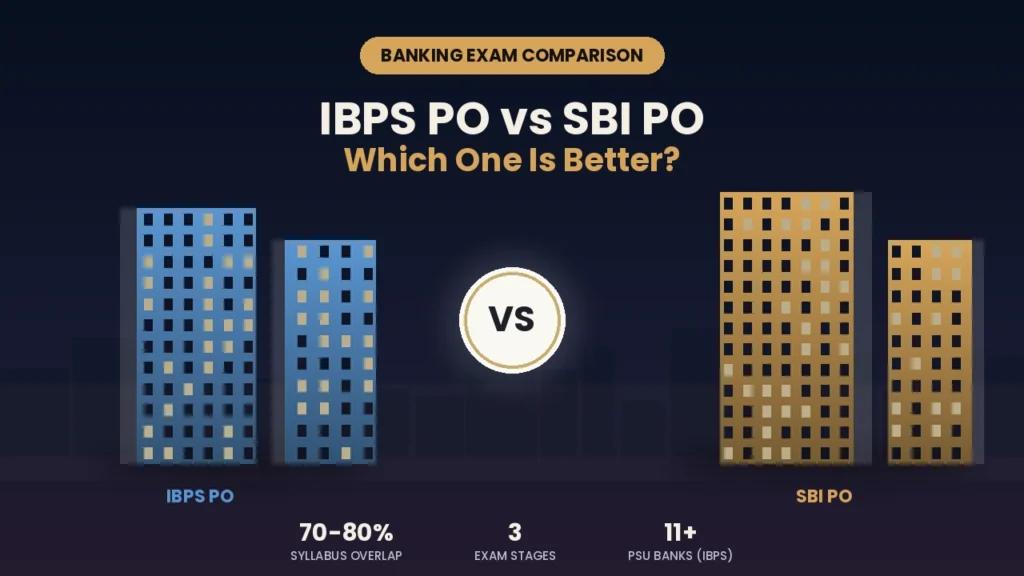
IBPS PO and SBI PO both recruit for the Probationary Officer post in public sector banks, but they differ in scope, difficulty, and career environment. SBI PO recruits exclusively for the State Bank of India, India’s largest public sector bank, and is widely regarded as the tougher exam due to its unpredictable, analytically demanding Mains pattern, while IBPS PO recruits centrally for around eleven to twelve participating public sector banks through a more stable, predictable question pattern. SBI PO generally offers a somewhat higher gross salary once allowances are included, along with faster promotion opportunities given SBI’s larger branch network, but this comes with greater work pressure, bigger targets, and more frequent transfers. IBPS PO offers broader bank choice and a comparatively better work-life balance. Since the syllabus overlaps by roughly 70 to 80 percent across both exams, most serious aspirants prepare for both simultaneously rather than choosing one exclusively.
Every banking aspirant eventually asks this question, and the honest answer is that neither exam is universally better, they simply suit different priorities. This guide breaks down exactly how IBPS PO and SBI PO differ across exam pattern, salary, career growth, and work culture, so you can decide based on what actually matters for your situation.
How the Two Exams Actually Differ in Structure
Both exams follow a broadly similar three-stage process, Prelims, Mains, and Interview, but the details within each stage genuinely diverge.
- IBPS PO is conducted centrally by the Institute of Banking Personnel Selection and recruits for multiple public sector banks simultaneously, including institutions like Bank of Baroda, Punjab National Bank, and Union Bank of India, giving candidates a wider spread of potential postings.
- SBI PO is conducted exclusively for the State Bank of India, meaning every selected candidate joins the same institution, with SBI’s own recruitment team designing the exam pattern independently of IBPS.
- SBI’s Mains exam has moved toward less predictable, more analytically demanding question styles, including newer puzzle formats in Reasoning that have caught aspirants off guard in recent cycles, alongside a 30-mark descriptive Communication Skills paper covering email writing and either report writing or precis writing.
- IBPS PO’s pattern remains comparatively stable year to year, which makes it somewhat easier to prepare for using structured previous year paper practice, though it also includes a Personality Test and Interview component.
- SBI PO Prelims does not apply a sectional cutoff, with shortlisting based on aggregate marks and category-wise merit, while both exams generally maintain sectional timing within the Prelims stage.
Comparing IBPS PO and SBI PO at a Glance
| Factor | IBPS PO | SBI PO |
|---|---|---|
| Recruiting Body | IBPS (multiple PSU banks) | State Bank of India exclusively |
| Exam Difficulty | Comparatively stable, predictable pattern | More analytical, unpredictable Mains pattern |
| Salary | Slightly lower gross pay | Slightly higher gross pay with more allowances |
| Promotion Speed | Standard, steady progression | Generally faster given larger branch network |
| Work Pressure | Comparatively balanced | Higher, with bigger targets and frequent transfers |
| Bank Choice | Multiple participating banks | Single institution (SBI only) |
| Syllabus Overlap | 70-80% shared with SBI PO | 70-80% shared with IBPS PO |
| Work-Life Balance | Generally better | Generally more demanding |
Exact salary figures, participating bank lists, and pattern details shift with each recruitment cycle, so always verify current numbers directly through the official IBPS and SBI recruitment notifications before finalizing your preparation plan.
Salary and Career Growth Compared
Compensation is one of the first things most aspirants compare, and while both offer genuinely strong government banking salaries, the details matter.
- Both exams start Probationary Officers at a comparable basic pay level within the Junior Management Grade Scale, though SBI’s overall gross salary tends to run somewhat higher once allowances and perks are factored in.
- SBI’s significantly larger branch network translates into more frequent internal vacancies, which generally supports faster promotion timelines compared to IBPS-recruited banks.
- IBPS PO postings, spread across multiple banks, mean your career trajectory depends partly on which specific bank you’re allotted to, since promotion pace and internal culture can vary between participating institutions.
- SBI’s brand recognition as India’s largest public sector bank carries genuine weight on a resume, which some candidates value independently of salary numbers alone.
Work Culture and Daily Job Experience
Beyond the numbers, the actual day-to-day experience differs meaningfully between the two.
- SBI PO roles typically come with higher performance targets and greater branch-level pressure, reflecting SBI’s scale and the intensity of its customer base.
- IBPS PO roles, spread across various banks, tend to offer comparatively steadier day-to-day pressure, though this varies by which specific bank you’re assigned to.
- Transfers tend to be more frequent for SBI POs given the sheer size of SBI’s branch network across the country, which can be a genuine consideration if geographic stability matters to you.
- IBPS-recruited roles generally offer somewhat more predictable postings, though this too depends on the specific participating bank.
How to Decide Which Exam Fits You Better
Given how closely matched these two exams are on paper, the right choice comes down to your own priorities rather than a universal answer.
- Choose SBI PO if you’re drawn to India’s largest public sector bank’s brand strength, want faster promotion opportunities, and are comfortable with higher work pressure and more frequent transfers.
- Choose IBPS PO if you’d prefer a broader set of potential banks, value a comparatively steadier work-life balance, and want a more predictable exam pattern to prepare against.
- Prepare for both simultaneously if you’re not strongly decided either way, since the substantial syllabus overlap means dual preparation is genuinely efficient rather than duplicative effort.
- Weigh geographic flexibility honestly. If frequent transfers would be genuinely disruptive to your circumstances, this practical factor may matter more than either exam’s prestige or salary difference.
Frequently Asked Questions
Q. Is SBI PO harder than IBPS PO?
A. Yes, SBI PO is widely considered more difficult, primarily because its Mains exam uses less predictable, more analytically demanding question patterns compared to IBPS PO’s comparatively stable format.
Q. Which pays more, IBPS PO or SBI PO?
A. SBI PO generally offers a somewhat higher gross salary once allowances are included, though basic pay scales across both exams are broadly comparable at entry level.
Q. Can I prepare for both IBPS PO and SBI PO together?
A. Yes. The syllabus overlap between the two exams is roughly 70 to 80 percent, covering Reasoning, Quantitative Aptitude, English, and General Awareness, making simultaneous preparation genuinely practical with only minor adjustments for each exam’s specific pattern.
Final Thoughts
IBPS PO and SBI PO both lead to genuinely strong, respected Probationary Officer careers in public sector banking, and neither is objectively better across every dimension. SBI PO offers stronger brand value, faster promotion potential, and slightly higher pay, balanced against greater work pressure and more frequent transfers, while IBPS PO offers broader bank choice, a more predictable exam pattern, and comparatively steadier work-life balance. Given the substantial syllabus overlap, the smartest approach for most aspirants is preparing for both rather than picking one exclusively, letting your eventual results and personal priorities guide which offer you accept when the time comes.